
How the EU Makes Foreign Policy: Institutions, Power, and the UK View
When the EU agreed its 13th sanctions package against Russia in early 2024, headlines in London, Washington and Beijing framed it as a single European move. In practice, that package was stitched together over weeks of negotiation between 27 national capitals, each with its own red lines, trade exposures and domestic politics. So why does the EU often seem to speak with many voices at once — and yet still act as one of the most powerful trade and regulatory blocs on earth? At global-europe.org, we think the answer sits in the unusual legal architecture of EU foreign policy, and it matters enormously for the UK.
The Legal and Institutional Map of EU Foreign Policy
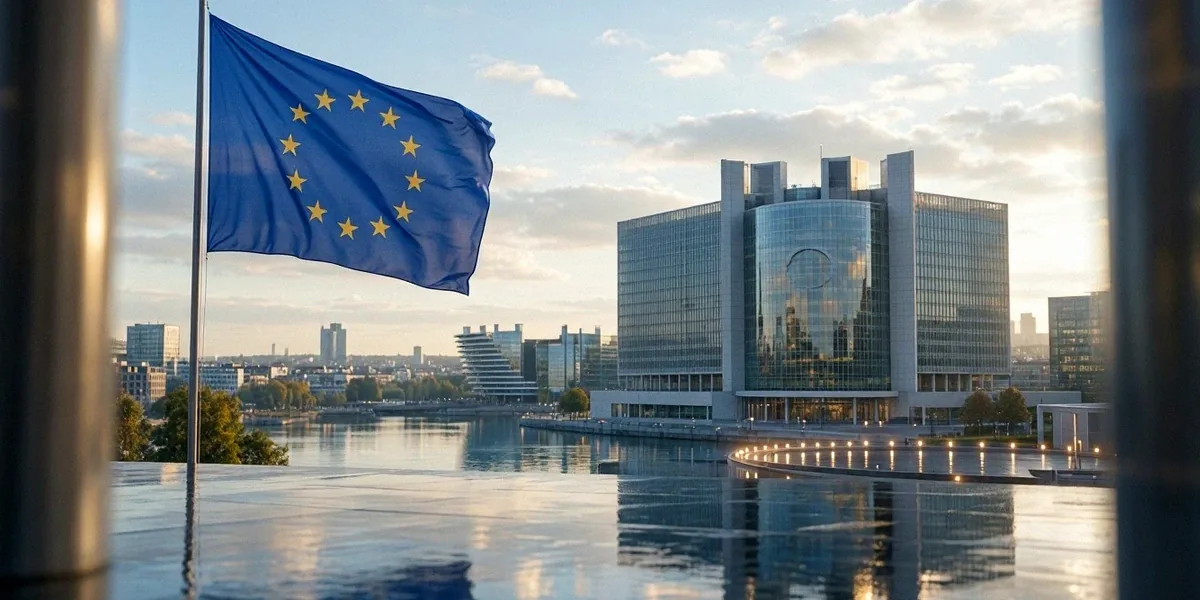
EU foreign policy is not like EU agricultural policy or competition law. It sits deliberately between two methods of governance: the intergovernmental method, where member states keep the whip hand, and the supranational method, where Brussels institutions drive the agenda. Understanding that hybrid is the key to reading almost any EU external action.
Where the Treaties Give the EU a Voice
The Treaty on European Union (TEU) sets out the Common Foreign and Security Policy (CFSP) in Title V. Article 24 states that CFSP is subject to “specific rules and procedures” and that the European Council and Council act unanimously in most cases. Crucially, the Court of Justice of the EU has only limited jurisdiction over CFSP, which reinforces the intergovernmental character. Alongside CFSP, the EU’s Common Commercial Policy is set out in the Treaty on the Functioning of the EU (TFEU), where the rules are very different — and far more supranational.
The High Representative and the EEAS
The High Representative of the Union for Foreign Affairs and Security Policy — currently Kaja Kallas — is a hybrid figure. She chairs the Foreign Affairs Council, is a Vice-President of the European Commission, and heads the European External Action Service (EEAS), the EU’s diplomatic service headquartered in Brussels with over 140 delegations worldwide. The EEAS drafts sanctions proposals, runs crisis diplomacy and coordinates with national foreign ministries. But it cannot override a member state that refuses to sign up to a common position.
National Capitals Still Hold the Veto
On most CFSP decisions — sanctions, common positions, civilian missions — unanimity applies. That gives every member state, from Germany to Malta, an effective veto. This is why EU sanctions packages often take months and why individual member states can carve out exemptions for their own economic interests. It is also why the phrase “EU foreign policy” can be misleading: what often exists is a lowest-common-denominator position that 27 governments can live with.
How Decisions Actually Get Made
If we want to understand why the EU moves slowly on some files and quickly on others, we need to follow the paper trail through the institutions. Three layers matter most:
- The European Council — heads of state and government — sets the strategic direction on Ukraine, China or the Middle East.
- The Foreign Affairs Council, chaired by the High Representative, brings national foreign ministers together roughly once a month to adopt sanctions and agree positions.
- COREPER II and working parties prepare the agenda and do the real bargaining, where a single sanctions listing can be held up for weeks.
Qualified Majority Voting in Trade
Trade is the exception. Under Article 207 TFEU, the Common Commercial Policy is an exclusive EU competence, and most trade decisions are taken by qualified majority voting (QMV) in the Council. That means a single member state cannot block an EU trade agreement the way it can block a foreign policy position. The Commission negotiates, the Council authorises, and the European Parliament must consent. This is why the EU can sign trade deals with Japan, Vietnam or Mercosur partners while struggling to agree a joint statement on the Middle East.
Trade Policy: Where the EU Is Most Unified
If foreign policy is the EU’s weakest collective muscle, trade is its strongest. The contrast tells us a lot about how the bloc actually projects power.
Exclusive Competence and the Commission’s Mandate
DG Trade in the European Commission negotiates on behalf of all 27 member states, following a mandate agreed by the Council. Recent agreements illustrate the reach: the EU–Japan Economic Partnership Agreement (in force since 2019), the EU–Vietnam Free Trade Agreement (2020), and the long-running EU–Mercosur talks, where political agreement was reached in 2024 but ratification remains contested. In each case, the Commission speaks with one voice because the treaties let it.
The European Parliament’s Veto
The European Parliament must consent to most EU trade agreements, giving MEPs a genuine veto. The rejection of ACTA in 2012 and the long fight over CETA’s ratification showed that the Parliament is not a rubber stamp. For the UK, this matters: any future upgrade to EU–UK trade arrangements will need MEP approval, not just Council sign-off.
Mixed Agreements and National Ratification
Many EU trade deals are “mixed agreements”, covering areas of shared competence such as investment protection. That means every national parliament — and in some cases regional parliaments — must ratify. This is why CETA has been provisionally applied since 2017 but still awaits full ratification in several member states.
Strategic Autonomy and EU–Asia Relations
Since around 2016, “strategic autonomy” has become the organising idea of EU external action. It shapes how Brussels approaches China, semiconductors, defence procurement and the Indo-Pacific.
What Strategic Autonomy Means in Practice
Strategic autonomy does not mean autarky. It means reducing critical dependencies — on Chinese rare earths, on US security guarantees, on Taiwanese advanced chips — while keeping the EU open to trade. In practice it has produced the European Chips Act, the Anti-Coercion Instrument, and a sharper focus on economic security screening.
The Indo-Pacific Guidelines and China
The EU’s Indo-Pacific strategy (2021) guides its approach to EU–Asia relations, framing the region as central to European prosperity and security. It sits alongside the EU’s “de-risking” language on China, its trilateral cooperation with the US and Japan on semiconductors, and its concern over Taiwan Strait stability. China’s Belt and Road Initiative is treated less as a direct threat than as a competitor for infrastructure influence in Southeast Asia, Central Asia and the Western Balkans.
De-risking vs Decoupling
Brussels is explicit: it wants to de-risk, not decouple. That means targeted controls on advanced chipmaking equipment, outbound investment screening, and diversification of supply chains — but continued trade in most goods. The tension is real: member states with deep Chinese export exposure, notably Germany, push back on anything that looks like broad decoupling.
What This Means for the UK
Post-Brexit, the UK sits outside the room where these decisions are made — but it is far from insulated from them.
The Trade and Cooperation Agreement
The UK–EU Trade and Cooperation Agreement (TCA) governs post-Brexit trade and includes limited foreign policy coordination. It covers goods, services, fisheries, energy and level playing field provisions, but it is not a customs union or single market arrangement. On foreign policy, the TCA contains only loose consultation language — no obligation to align, no formal seat at the table.
The Windsor Framework and Northern Ireland
The Windsor Framework (2023) reshaped Northern Ireland’s trading arrangements with the EU, introducing green and red lanes for goods and a Stormont brake on new EU rules. It resolved the most acute post-Brexit dispute, but it also confirmed that Northern Ireland remains, in regulatory terms, inside parts of the EU’s orbit — a structural feature of the UK’s new relationship with the bloc.
UK–EU Coordination on Sanctions
On sanctions, the UK and EU largely align — both have imposed extensive measures on Russia since 2022 — but they do so through parallel processes. UK officials are briefed informally, and coordination happens through diplomatic channels rather than institutional machinery. When the EU debates the next sanctions package, the UK watches from outside, then mirrors what it can.
Where the EU’s Foreign Policy Is Heading
Three forces will shape the next decade of EU external action.
Enlargement and Institutional Reform
With Ukraine, Moldova and the Western Balkans in the accession pipeline, the EU faces a hard question: can a union of 30-plus members run foreign policy on unanimity? The European Commission’s own reports have flagged that enlargement requires institutional reform, including in CFSP.
PESCO and European Defence
Permanent Structured Cooperation (PESCO) now includes most member states in joint defence projects, from cyber to maritime surveillance. It remains modest compared to NATO, but it signals a long-term shift toward European defence industrial capacity — and a more capable EU voice on security.
The Unanimity Debate
The most consequential argument in Brussels today is whether to move parts of foreign policy to qualified majority voting. France, Germany and others support “passerelle” clauses that would allow QMV in specific areas such as human rights sanctions. Smaller states, and notably Hungary, resist. If QMV were extended, EU foreign policy would become faster — and the UK’s outside status more consequential.
FAQ
Does the EU have a single foreign policy?
Not exactly. The EU has a common framework under the Treaty on European Union, but most foreign policy decisions require unanimity among member states. That means the EU often speaks with one voice on trade and sanctions, and with many voices on broader geopolitical questions.
Why is EU trade policy more unified than EU foreign policy?
Because trade is an exclusive EU competence under Article 207 TFEU. The Commission negotiates on behalf of all member states, most decisions use qualified majority voting, and the European Parliament must consent. Foreign policy, by contrast, remains largely intergovernmental and subject to national vetoes.
Does the UK have any formal role in EU foreign policy after Brexit?
No. The UK–EU Trade and Cooperation Agreement includes limited foreign policy coordination but no institutional seat. The UK aligns with EU sanctions through parallel processes and informal diplomatic channels, not through formal decision-making.
What is strategic autonomy?
Strategic autonomy is the EU’s goal of reducing critical dependencies — in defence, technology, energy and supply chains — while remaining open to trade. It shapes the EU’s Indo-Pacific strategy, its China policy of “de-risking”, and instruments like the European Chips Act and the Anti-Coercion Instrument.
Could the EU replace unanimity with qualified majority voting in foreign policy?
It is actively debated. France and Germany support extending QMV to certain foreign policy areas via passerelle clauses, while several smaller member states — including Hungary — oppose it. Any change would require unanimous agreement among member states, which is itself the hardest hurdle.
For the UK, understanding how the EU makes foreign policy is not an academic exercise. Trade, sanctions, defence industrial policy and Indo-Pacific strategy all shape British interests, and the UK now engages these decisions from outside the room. Tracking the institutions, the voting rules and the internal debates is how we make sense of a bloc that is neither a superstate nor a simple club of states — and how we anticipate where it will move next.