
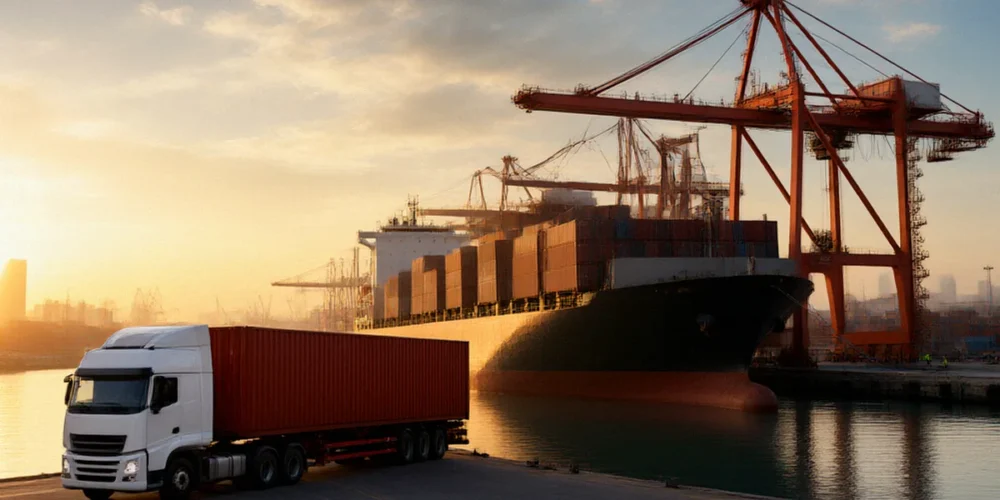
How EU Trade Deals with Asia Affect British Exporters
While UK ministers tout new post-Brexit trade deals from the despatch box, many British exporters are discovering a rather uncomfortable truth: EU agreements with Asia still set the rules of the game. A Scotch whisky distiller in Speyside, a machinery manufacturer in the Midlands and a pharmaceutical firm in Cambridge can all find themselves bound by tariff schedules and rules of origin negotiated in Brussels — deals the UK is no longer party to. We wanted to unpack what that actually means for British businesses selling into Asia, and what practical options exist.
Why EU Trade Deals with Asia Still Matter to UK Exporters
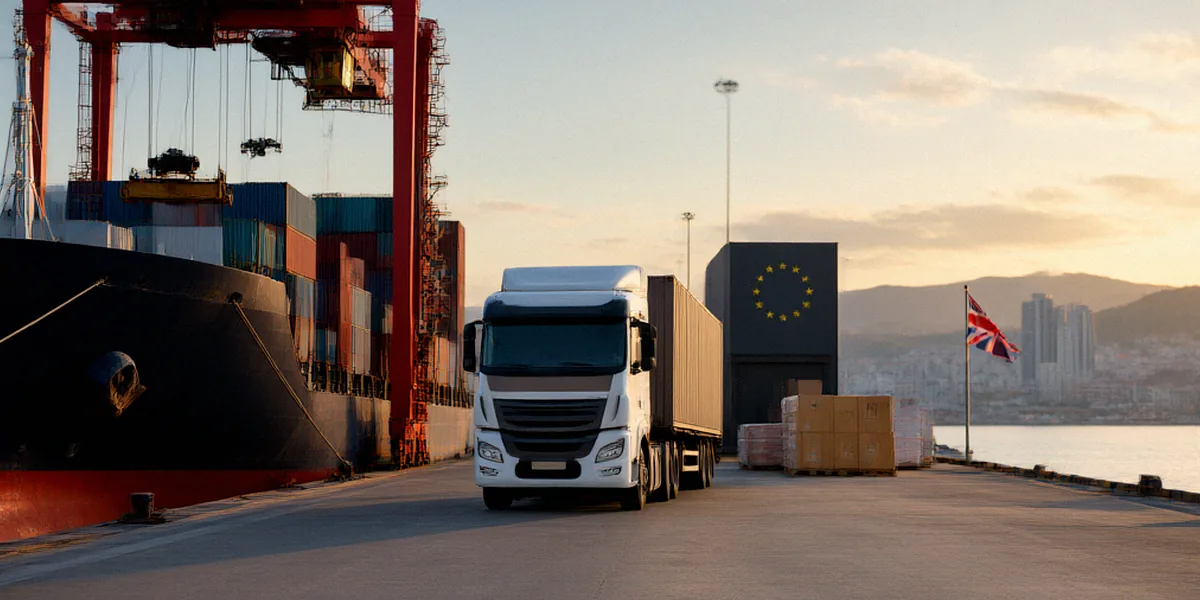
The UK left the EU, but it did not leave the gravitational pull of the EU’s trade architecture. The bloc has struck free trade agreements with Japan, South Korea, Vietnam, Singapore and others, and these deals continue to shape the terms on which goods move across Asian borders. When a British exporter ships to Seoul or Tokyo, it does so under the UK’s own agreements — not the EU’s — which means different tariff lines, different documentary requirements and, crucially, different rules of origin.
Rules of origin determine whether a product qualifies for preferential treatment. Under EU FTAs, inputs sourced from across the EU can be “cumulated” — counted as originating content. British firms no longer benefit from that cumulation, so a product assembled in the UK with EU components may fail to meet the origin threshold under a UK-specific deal, triggering higher tariffs. That is the hidden cost of divergence, and it catches out exporters who assume a trade deal is a trade deal.
The EU-Japan Economic Partnership Agreement and UK Automotive Exports
The EU-Japan EPA, in force since 2019, phased out tariffs on the vast majority of industrial goods. Japanese automakers with European supply chains benefited enormously. UK automotive exporters, by contrast, now operate under the UK-Japan Comprehensive Economic Partnership Agreement (CEPA), which entered into force in 2021. CEPA is broadly similar in coverage, but the origin rules are UK-specific, and parts sourced from EU suppliers may not count towards the local content threshold. For a sector already navigating electrification and thin margins, that is a meaningful friction.
Rules of Origin: The Hidden Barrier for British Goods
We consistently find that rules of origin are the single most misunderstood element of post-Brexit trade. They are not a formality — they are the mechanism that decides whether a tariff applies at all. For British exporters, the loss of EU cumulation means supply chains that once qualified automatically may now need restructuring, additional documentation or, in some cases, a wholly different sourcing strategy.
Key EU-Asia Deals and Their Direct Impact on British Sectors
To make this concrete, it helps to look at the agreements individually. Each creates a distinct set of advantages for EU firms that UK exporters must now match without the same tools.
- EU-South Korea FTA: Eliminated tariffs on nearly all goods and opened services and procurement markets.
- EU-Vietnam FTA: Phased out 99% of tariffs over seven years, with strong benefits for textiles, footwear and machinery.
- EU-Singapore FTA: A gateway agreement covering goods, services and investment, often used as a hub for regional distribution.
- EU-India negotiations: Ongoing talks that could reshape access for services, pharmaceuticals and premium food and drink.
- EU-ASEAN engagement: Bilateral deals with individual member states building towards broader regional coverage.
EU-South Korea: Lessons for UK Electronics and Pharma
South Korea is a critical market for UK electronics and pharmaceutical exporters. Under the EU-Korea FTA, EU firms enjoy zero tariffs on most industrial products and simplified customs procedures. UK firms operate under a continuity agreement, which preserves much of the tariff benefit but not the cumulation advantages. For pharma, where regulatory approval and batch testing add complexity, the loss of EU-aligned conformity processes can slow market entry.
EU-Vietnam and the UK’s Textile and Footwear Exporters
The EU-Vietnam FTA phased out 99% of tariffs over seven years, making Vietnam an increasingly attractive sourcing and export destination. UK textile and footwear firms face a dual challenge: they compete with EU brands that enjoy preferential access, and they must prove UK origin for their own exports. Scotch whisky exports to Asia face different tariff treatment under EU FTAs versus UK deals — a point worth repeating, because premium food and drink is one of the UK’s strongest export categories and tariff differentials of even a few percentage points matter at scale.
The EU-India Negotiations: What British Services Firms Should Watch
India is a services-heavy market, and the EU’s negotiations cover professional services, financial services and digital trade. If Brussels secures meaningful commitments, EU firms will gain a first-mover advantage in areas where UK services exporters are highly competitive. We are watching these talks closely, because the outcome will shape the baseline against which any future UK-India agreement is judged.
How UK Exporters Are Adapting to the New Reality
The good news is that adaptation is happening. British firms are not passive; they are restructuring supply chains, opening overseas entities and using customs mechanisms to remain competitive.
Leveraging UK-Japan CEPA and Other Bilateral Deals
The UK-Japan CEPA, in force since 2021, provides tariff-free access for most goods and includes provisions on digital trade and services. It is not identical to the EU-Japan EPA, but it is a workable framework. Similarly, the UK-South Korea continuity deal preserves much of the previous access. The key is for exporters to understand where their specific product sits within these agreements, rather than assuming equivalence.
The ‘EU Subsidiary’ Strategy: Costs and Benefits
One increasingly common response is to establish an EU subsidiary — often in Ireland, the Netherlands or Germany — so that goods can benefit from EU cumulation and preferential access. The benefits are clear: access to EU FTAs, simpler origin qualification and a single regulatory framework. The costs are equally real: administration, tax complexity, and the loss of “UK-made” branding in some markets.
Freeports and Customs Warehousing as Workarounds
Teesside and Felixstowe freeports offer customs and tax advantages for exporters, including duty suspension and simplified procedures. Used well, they can function as staging points where goods are processed, stored or re-exported without incurring tariffs until they enter the domestic market. For firms managing complex Asia-bound supply chains, these sites are becoming genuinely useful tools rather than political slogans.
The Strategic Dilemma: Divergence or Alignment with EU Rules
Here is the tension at the heart of UK trade policy. Aligning with EU rules would reduce friction for exporters and restore many cumulation benefits. But alignment constrains the UK’s ability to strike independent deals with the US, India and Asian economies that may demand different standards. Divergence offers theoretical flexibility but imposes real costs on firms already trading with the EU and its FTA partners.
Northern Ireland Protocol: A Special Case for Exporters
The Northern Ireland Protocol creates a dual regulatory regime for goods, with Northern Ireland effectively remaining within the EU’s single market for goods while Great Britain operates outside it. For exporters, this means goods moving from Great Britain to Northern Ireland face customs processes, while Northern Ireland goods can access both UK and EU markets. It is a workable arrangement for some, a headache for others, and it remains politically contested.
Could the UK Join the Pan-Euro-Mediterranean Convention?
The Pan-Euro-Mediterranean Convention allows diagonal cumulation of origin across a wide group of countries. If the UK were to join, British exporters could count EU and other participating inputs towards origin thresholds — a potentially significant win. The politics are complicated, but we think it deserves more attention than it currently receives.
What British Exporters Should Do Next
Rather than waiting for the next headline trade deal, we advise exporters to take practical steps now. The firms navigating this best are the ones treating origin and tariffs as core commercial issues, not compliance afterthoughts.
Auditing Your Supply Chain for Rules of Origin
Map where your components come from and whether they meet UK-specific origin thresholds. Identify where EU inputs are creating problems and whether alternative sourcing or processing steps could resolve them.
Using UK Government Tools and Trade Associations
The UK government’s Trade Tariff tool provides line-by-line tariff and origin information. Trade associations such as the British Chambers of Commerce and the Institute of Export & International Trade offer guidance, training and advocacy. Engaging with them early saves time and money.
FAQ
Do EU trade deals with Asia still apply to UK exporters?
No. The UK is no longer party to EU FTAs, so British exporters must rely on the UK’s own agreements, which may have different tariff schedules and rules of origin.
What is cumulation and why does it matter?
Cumulation allows inputs from partner countries to count towards origin thresholds. Losing EU cumulation means UK firms may need to restructure supply chains to qualify for preferential tariffs.
Can setting up an EU subsidiary help UK exporters?
Yes. An EU subsidiary can access EU FTAs and cumulation rules, though it brings administrative costs and may affect branding.
How do freeports help exporters dealing with Asia?
Freeports like Teesside and Felixstowe offer customs and tax advantages, including duty suspension and simplified procedures, which can ease complex supply chains.
Should the UK align with EU rules to reduce friction?
Alignment would ease export friction but limit independent trade deals. It is a strategic trade-off with no easy answer.
British exporters cannot ignore EU-Asia trade deals. They shape the competitive landscape in markets from Tokyo to Hanoi, and the rules they set do not disappear because the UK left the EU. Proactive adaptation — auditing origin, using freeports, engaging with trade bodies and making informed decisions about alignment — is the key to staying competitive. Waiting for the next UK deal to solve the problem is not a strategy.