What Is the EU-ASEAN Relationship and Why Should Britain Care?
Westminster’s foreign policy debate is still dominated by Brussels. Every trade wrangle, every regulatory dispute, every row over the Northern Ireland Protocol pulls attention back to Europe. Meanwhile, almost unnoticed, the EU has been steadily deepening its ties with Southeast Asia—a region of 680 million people and some of the fastest-growing economies on the planet. For a Britain that likes to describe itself as a global trading nation, that quiet European advance deserves far more scrutiny than it currently gets.
What Exactly Is the EU-ASEAN Relationship?
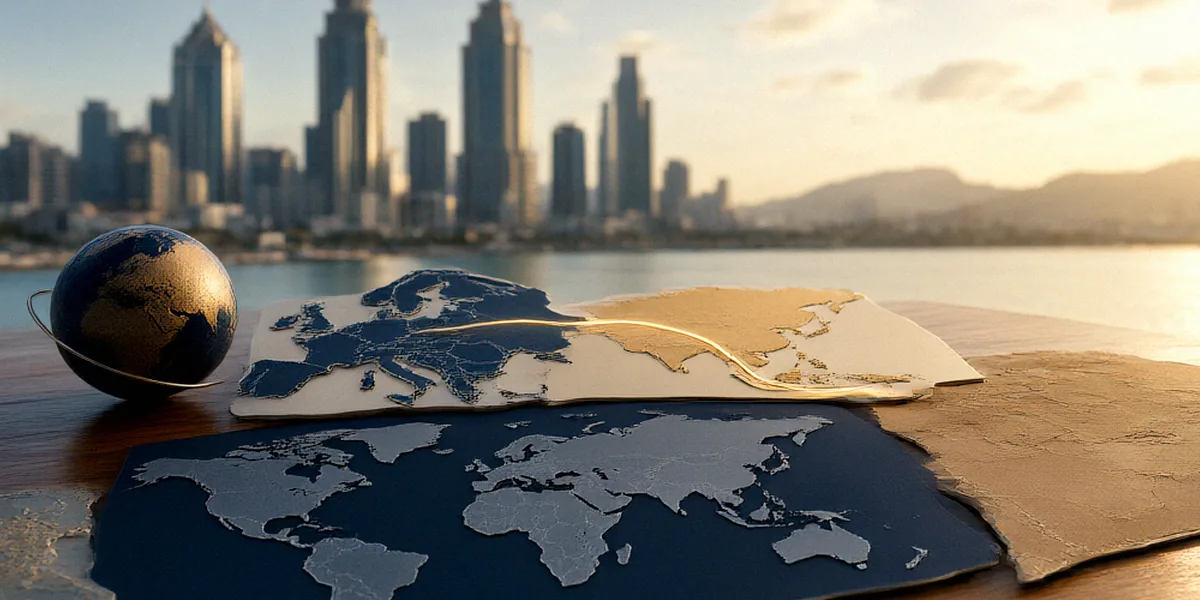
ASEAN—the Association of Southeast Asian Nations—comprises 10 member states with a combined population of about 680 million. It brings together Indonesia, Malaysia, the Philippines, Singapore, Thailand, Vietnam, Brunei, Cambodia, Laos, and Myanmar under one regional umbrella, and it has become one of the most important diplomatic forums in the Indo-Pacific.
The EU is one of ASEAN’s oldest dialogue partners, with formal ties dating back to 1977. That makes the relationship older than the Single Market itself. For decades it trundled along as a mix of development cooperation, diplomatic dialogue, and modest trade facilitation. Then, in 2020, the two blocs elevated their relationship to a Strategic Partnership—a signal that both sides now see each other as core interlocutors rather than distant acquaintances.
From Dialogue Partner to Strategic Partnership
The 2020 upgrade mattered because it moved the relationship beyond symbolism. The Strategic Partnership created a framework for cooperation on peace and security, connectivity, sustainable development, and economic integration. Annual ministerial meetings now sit alongside a growing number of sectoral dialogues covering everything from aviation to energy to digital policy.
For the EU, the appeal is obvious. ASEAN sits at the heart of the Indo-Pacific, a region that produces a rising share of global GDP and hosts the world’s most contested maritime flashpoints. For ASEAN, the EU offers a large market, a source of development finance, and—crucially—a partner that is not China or the United States.
The Institutions That Keep the Relationship Running
The architecture of the relationship is denser than most British observers realise. Key elements include:
- The ASEAN-EU Ministerial Meeting, which sets political direction at foreign minister level.
- The ASEAN-EU Joint Cooperation Committee, which manages day-to-day cooperation.
- The ASEAN-EU Business Council, which channels private-sector priorities into policy discussions.
- The ASEAN Regional Forum, where the EU participates in Asia-Pacific security dialogue.
- The ASEAN Defence Ministers’ Meeting Plus, which brings the EU into regional defence conversations.
None of this generates headlines in London. But it adds up to a durable institutional presence that shapes how Southeast Asian governments think about Europe—and about Britain’s place in it.
Trade and Investment: The Numbers That Matter
The trade relationship is substantial. The EU is ASEAN’s third-largest trading partner, and ASEAN is the EU’s third-largest trading partner outside Europe. Two-way trade in goods is worth over €270 billion a year. Add services and investment, and the figures climb further still.
For British exporters, the significance is straightforward: this is one of the world’s most dynamic economic corridors, and the EU is already embedded in it. Every trade facilitation agreement, every customs cooperation arrangement, every regulatory dialogue between Brussels and ASEAN capitals makes it easier for European firms to operate there.
Bilateral FTAs with Singapore, Vietnam, and Indonesia
Brussels has pursued trade liberalisation with ASEAN member states individually rather than waiting for a region-to-region deal. The EU has bilateral free trade agreements with Singapore and Vietnam, and is negotiating with Indonesia. Talks with Thailand and the Philippines have resumed or are under discussion. Each agreement opens up tariff-free access, procurement opportunities, and services markets for European companies.
These deals are not trivial. The EU-Singapore FTA and the EU-Vietnam FTA together cover a combined market of over 110 million people and give European firms preferential access in sectors ranging from automotive to financial services.
Why a Region-to-Region Trade Deal Remains Elusive
A bloc-to-bloc free trade agreement between the EU and ASEAN has been discussed for years but remains out of reach. The obstacles are familiar:
- ASEAN’s varying levels of economic development make common tariff schedules difficult to agree.
- Different labour and environmental standards across member states complicate regulatory alignment.
- Myanmar’s political situation has made some ASEAN members reluctant to negotiate collectively.
- ASEAN’s own internal trade liberalisation agenda remains incomplete.
The result is a patchwork approach: bilateral deals with the most willing partners, while region-to-region negotiations remain aspirational. It works, but it leaves gaps that competitors can exploit.
Security and Geopolitics: Navigating the Indo-Pacific
Trade is only part of the story. The EU has grown more assertive in the Indo-Pacific as China’s military and economic weight has expanded. Its 2021 Indo-Pacific Strategy made clear that Europe intends to be a security actor in the region, not just a trading partner.
That matters for ASEAN because the bloc’s own doctrine of “centrality”—the principle that ASEAN should sit at the centre of regional security architecture—depends on having multiple major powers engaged in the region. A stronger EU presence balances China and the United States without forcing Southeast Asian states into a binary choice.
The EU’s Indo-Pacific Strategy and ASEAN Centrality
The EU’s Indo-Pacific Strategy sets out seven priority areas, including trade, connectivity, climate, and security. Crucially, it explicitly endorses ASEAN centrality as the organising principle of the regional order. That is not just diplomatic language. It signals that Brussels is willing to work through ASEAN-led mechanisms such as the East Asia Summit rather than building parallel structures.
For ASEAN governments, this is reassuring. They want great powers engaged, but they want them engaged on ASEAN’s terms. The EU has largely accepted that framework, which gives it credibility in Southeast Asian capitals.
South China Sea Tensions and European Naval Presence
The South China Sea remains the region’s most dangerous flashpoint, with overlapping claims between China and several ASEAN member states. European navies have become more visible in the area. France, Germany, and the Netherlands have all deployed vessels to the Indo-Pacific in recent years, and joint exercises with regional partners have become more common.
The EU is not a claimant in the South China Sea and does not take sides on sovereignty. But it does insist on freedom of navigation and the peaceful settlement of disputes under international law—positions that align closely with ASEAN’s own stated principles.
Why Should Britain Care? The Post-Brexit Angle
Britain has its own Indo-Pacific ambitions. The 2021 Integrated Review committed the UK to a “tilt” towards the region, and the country has pursued deeper ties with Japan, Australia, India, and the ASEAN states. In 2023 the UK joined the Comprehensive and Progressive Agreement for Trans-Pacific Partnership (CPTPP), a trade bloc that includes several ASEAN members alongside Pacific economies.
But here is the awkward truth: Britain is now competing and cooperating with the EU in the same region, often on the same issues, with fewer resources and less institutional footprint.
The UK’s Indo-Pacific Tilt and CPTPP Membership
CPTPP accession was a genuine achievement. It gave the UK preferential access to a bloc covering around 500 million people and deepened economic links with Malaysia, Singapore, Vietnam, and Brunei. The UK also became an ASEAN Dialogue Partner in 2023, giving it a seat at the table in Southeast Asian diplomatic discussions.
Yet the UK lacks the scale that the EU brings. Its bilateral FTAs with ASEAN states are thinner than the EU’s, its development finance is smaller, and its diplomatic network in the region, while capable, cannot match the combined European presence.
Competition or Complementarity with EU Trade Policy?
In theory, the UK and EU could be natural collaborators in Southeast Asia. Both want open markets, rules-based trade, and a stable regional order. Both are wary of over-dependence on China. Both want to deepen engagement with ASEAN.
In practice, however, the two are competing. British and European exporters chase the same contracts. British and European trade negotiators offer similar packages to the same governments. And the political dynamics of post-Brexit Britain make formal coordination with Brussels politically toxic in Westminster.
What This Means for UK-EU Relations
This is where the story loops back to Europe. If Britain wants to be a serious Indo-Pacific player, it must decide how it relates to the EU’s own ambitions there. That requires confronting the unresolved baggage of Brexit.
Opportunities for UK-EU Coordination in Asia
There are areas where coordination would be straightforward and mutually beneficial. Joint infrastructure financing, shared positions on maritime security, aligned approaches to digital trade rules, and coordinated climate diplomacy in the region are all plausible. None requires political integration. All would make both sides more effective.
The challenge is political, not technical. Any formal UK-EU coordination framework runs into the domestic sensitivities that have defined British politics since 2016.
The Shadow of the Northern Ireland Protocol
The Northern Ireland Protocol remains a sticking point in UK-EU relations. It shapes trade flows between Great Britain and Northern Ireland, affects the political stability of the devolved institutions, and colours every conversation between London and Brussels. Until it is settled in a way both sides can live with, deeper UK-EU cooperation on any subject—including Southeast Asia—will remain constrained.
This is not a reason to avoid cooperation. It is a reason to be realistic about how quickly it can develop.
Our Take: Britain Cannot Afford to Ignore EU-ASEAN
The EU-ASEAN relationship is no longer a minor diplomatic footnote. It is a maturing partnership covering trade, security, climate, and connectivity—and it is being built while British attention is elsewhere. As Brussels deepens its ties with Southeast Asia, the UK risks being sidelined in one of the world’s most consequential regions.
That risk is not inevitable. Britain has real assets in the Indo-Pacific: CPTPP membership, a capable diplomatic network, strong defence relationships, and credibility in ASEAN capitals. But those assets are insufficient if they are not tied to a coherent strategy that understands how the EU fits into the regional picture.
Frequently Asked Questions
What is ASEAN and how many countries are in it?
ASEAN is the Association of Southeast Asian Nations, a regional bloc of 10 member states with a combined population of about 680 million. Its members are Indonesia, Malaysia, the Philippines, Singapore, Thailand, Vietnam, Brunei, Cambodia, Laos, and Myanmar.
When did the EU and ASEAN become dialogue partners?
The EU and ASEAN have been dialogue partners since 1977, making the EU one of ASEAN’s oldest external partners. In 2020 the two blocs elevated their ties to a Strategic Partnership.
How much trade is there between the EU and ASEAN?
The EU is ASEAN’s third-largest trading partner, and ASEAN is the EU’s third-largest trading partner outside Europe. Two-way trade in goods is worth over €270 billion a year.
Does the UK have its own trade relationship with ASEAN?
Yes. The UK became an ASEAN Dialogue Partner in 2023 and joined the Comprehensive and Progressive Agreement for Trans-Pacific Partnership (CPTPP) in the same year. The UK also maintains bilateral trade agreements with several ASEAN member states.
Why does the Northern Ireland Protocol matter for UK-EU cooperation in Asia?
The Northern Ireland Protocol remains a sticking point in UK-EU relations. Until it is resolved to both sides’ satisfaction, it constrains the political space for deeper cooperation between London and Brussels on any shared international priority, including Southeast Asia.
Britain’s global ambitions depend on understanding—and engaging with—the EU’s growing role in Southeast Asia. Ignoring Brussels in the Indo-Pacific is a luxury the UK cannot afford.