How the EU Makes Foreign Policy: The Institutions in Plain English
You’re reading the news over breakfast and a headline stops you: “EU agrees new sanctions package after Foreign Affairs Council meeting.” Then the article mentions the High Representative, the European Council, the EEAS, and something called a “common position.” By paragraph three, you’ve lost the thread entirely. The EU’s foreign policy machine has more moving parts than most national governments, and the acronyms don’t help. So let’s strip it back and walk through who actually does what — and why it matters for anyone following UK-EU relations.
Who Actually Sets EU Foreign Policy? The Key Players
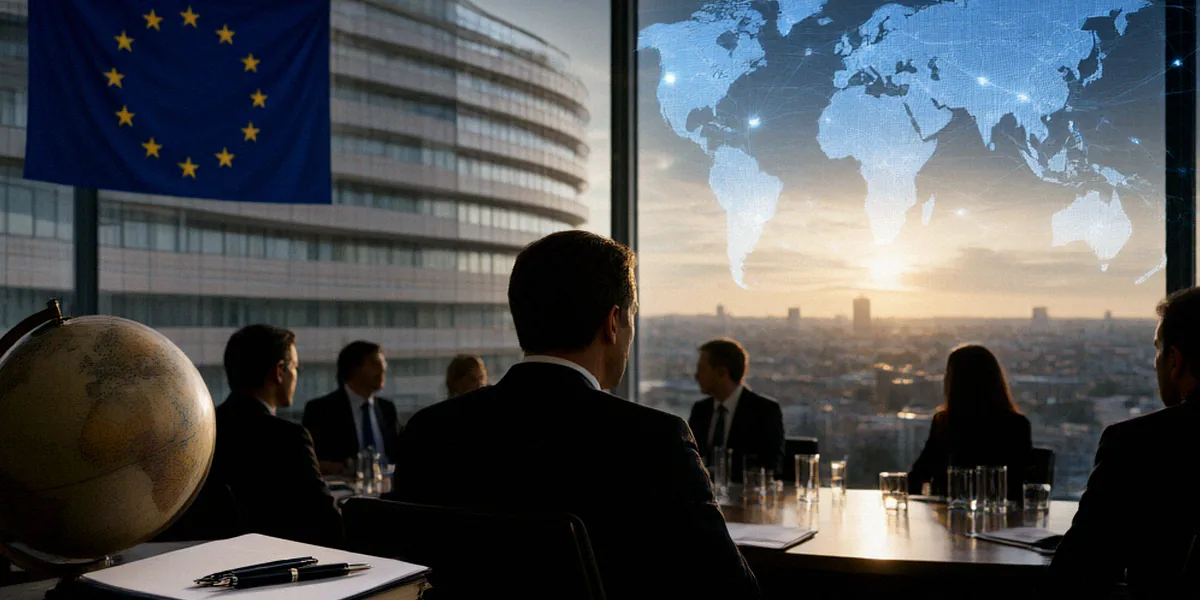
EU foreign policy isn’t made in one building by one group of people. It emerges from a conversation between member states, EU institutions, and a diplomatic service that sits somewhere in between. Four players matter most:
- The European Council — heads of state or government, setting strategic direction.
- The High Representative — the EU’s most visible diplomatic figure.
- The European External Action Service (EEAS) — the EU’s diplomatic corps.
- The Council of the EU — where national ministers negotiate and decide.
The European Council: Strategic Direction
The European Council brings together the heads of state or government of all 27 member states, plus its own president. It doesn’t draft legislation or negotiate sanctions lists. Instead, it sets the strategic direction — the broad strokes of where the EU wants to stand in the world. When EU leaders meet to discuss relations with China, support for Ukraine, or the future of enlargement, that’s the European Council shaping the political weather that the other institutions then work within.
The High Representative and the EEAS
The High Representative of the Union for Foreign Affairs and Security Policy is the EU’s most visible diplomatic figure — currently also a Commission Vice-President, which gives the role a foot in both camps. The High Representative chairs the Foreign Affairs Council, represents the EU abroad, and runs the European External Action Service (EEAS), headquartered in Brussels. Think of the EEAS as the EU’s diplomatic corps: it staffs EU delegations around the world, prepares policy papers, and does the day-to-day diplomacy that turns political direction into actual engagement.
The Council of the EU: Where Member States Negotiate
Not to be confused with the European Council, the Council of the EU (sometimes called “the Council of Ministers”) is where national ministers meet by policy area. For foreign policy, that means foreign ministers gathering in the Foreign Affairs Council. This is where member states actually negotiate positions, amend proposals, and sign off on decisions. It’s the engine room of EU foreign policy — less glamorous than a leaders’ summit, but where the real bargaining happens.
How a Common Position Emerges: From Proposal to Action
So how does the EU go from a shared concern to an actual policy? The process usually starts with a proposal — either from the High Representative or from the European Commission — which then lands on the table of the Council of the EU for member states to debate, amend, and decide on.
The Role of the Foreign Affairs Council
The Foreign Affairs Council meets monthly in Brussels, bringing together foreign ministers from all member states. It’s chaired by the High Representative and deals with the Common Foreign and Security Policy (CFSP), defence, trade, and development cooperation. If the EU is going to impose sanctions, launch a civilian mission, or issue a joint statement on a crisis, this is typically the body that approves it.
Unanimity vs. Qualified Majority in Foreign Policy
Here’s a crucial detail that trips people up: most foreign policy decisions require unanimity. Every member state has a veto. That’s why EU statements on Israel, Russia, or China often sound carefully worded — they’ve been negotiated until all 27 could live with them. Qualified majority voting applies in some areas, particularly trade, but for core CFSP decisions, one holdout can block the room.
Case Study: EU Sanctions on Russia
Since 2022, the EU has adopted multiple sanctions packages against Russia. Each one required unanimous agreement among all 27 member states, often after weeks of negotiation over carve-outs and exemptions. The Foreign Affairs Council formally adopted each package, following proposals coordinated by the High Representative and the Commission. It’s a slow, deliberate process — but it also means every package carries the weight of collective agreement.
The European Commission’s Role in Trade and External Relations
While the High Representative handles political diplomacy, the European Commission runs the EU’s trade policy and much of its external representation in economic and development matters. This is where the EU acts most like a single actor on the world stage.
Trade Deals: Who Negotiates for the EU?
The Commission negotiates trade agreements on behalf of all member states, following a mandate agreed by the Council. It’s a powerful position: one negotiator, 27 markets. The Commission has pursued an active trade agenda through its Trade Policy Review, which emphasises open, sustainable, and assertive trade — including a sharper focus on enforcement and level playing field provisions.
The EU-UK Trade and Cooperation Agreement
The EU-UK Trade and Cooperation Agreement was signed in December 2020, after months of tense negotiation between the Commission (led by Michel Barnier) and the UK government. It governs the bulk of the post-Brexit trading relationship, covering goods, services, fisheries, and level playing field commitments. The Commission continues to manage the agreement’s implementation through specialised committees that meet regularly.
Development and Humanitarian Aid
The Commission also manages a significant share of the EU’s development assistance and humanitarian aid, making it one of the world’s largest donors. Through programmes like Global Gateway, the EU channels investment into infrastructure, health, and climate projects in partner countries — an area where trade, diplomacy, and development increasingly overlap.
Where Does the European Parliament Fit In?
The European Parliament is often described as the EU’s only directly elected institution, but its role in foreign policy is more limited than in other areas. It doesn’t decide sanctions or military missions — but it does shape the debate and hold others to account.
Consultation and Scrutiny in Foreign Policy
In CFSP, the Parliament’s role is largely consultative. It must be informed and consulted on the main aspects of foreign policy, and it regularly debates international issues, passes resolutions, and questions the High Representative. Its scrutiny of the EEAS — through hearings, reports, and budget oversight — gives it real influence even without a formal veto.
Parliament’s Power Over Trade Agreements
Trade is different. Under the Lisbon Treaty, the European Parliament must consent to most international trade agreements. That means a deal negotiated by the Commission can be voted down by MEPs — a power they’ve used to extract concessions on human rights, climate, and labour standards. It’s one of the Parliament’s most significant levers in external relations.
The Parliament’s UK Delegation
The European Parliament maintains a dedicated delegation for relations with the UK, which meets regularly with counterparts in Westminster and monitors the implementation of the Trade and Cooperation Agreement. It also passes resolutions on UK-EU relations, signalling political priorities that feed into the broader relationship.
What This Means for the UK: Reading the Brussels Tea Leaves
For the UK, understanding these institutions isn’t academic. As a third country, the UK no longer sits in the room when EU foreign policy is made — but it still has to respond to it, align with it where possible, and navigate the consequences.
The UK’s Post-Brexit Diplomatic Channels
The UK Mission to the EU, based in Brussels, is the primary diplomatic link between London and the EU institutions. It engages with the Commission, the EEAS, and member state representatives on everything from sanctions coordination to trade implementation. Alongside this, the UK maintains bilateral relationships with individual member states — often the most effective route to influence.
Aligning on Sanctions and Security
On Russia sanctions, the UK and EU have broadly aligned, though the legal mechanisms differ. The UK sanctions regime operates independently, but coordination happens through diplomatic channels and shared intelligence. On broader security questions — from NATO to the Indo-Pacific — the UK and EU often find themselves pursuing similar goals through different institutional frameworks.
The Northern Ireland Protocol and Foreign Policy
The Northern Ireland Protocol, part of the UK-EU Withdrawal Agreement, sits at the intersection of trade, foreign policy, and domestic politics. It governs customs and regulatory checks on goods moving between Great Britain and Northern Ireland, and its implementation has been a recurring flashpoint in UK-EU relations. While not strictly a foreign policy matter, it shapes the political trust that underpins cooperation on wider international issues.
Understanding how the EU makes foreign policy isn’t just an exercise in institutional trivia. It’s essential for anyone tracking UK-EU relations, trade negotiations, or European security. Despite Brexit, the UK and EU remain deeply intertwined — in sanctions coordination, in trade, in development, and in the daily diplomacy that shapes global affairs. Knowing who decides what in Brussels is the first step to reading the tea leaves accurately.
FAQ
Who is the EU’s top diplomat?
The High Representative of the Union for Foreign Affairs and Security Policy, who also serves as a Commission Vice-President and chairs the Foreign Affairs Council. The role is supported by the European External Action Service (EEAS), headquartered in Brussels.
Does the UK have any say in EU foreign policy after Brexit?
No formal say. The UK is a third country and no longer participates in EU decision-making. However, it engages through the UK Mission to the EU in Brussels, bilateral channels with member states, and ad hoc coordination on issues like sanctions.
How often does the Foreign Affairs Council meet?
The Foreign Affairs Council meets monthly in Brussels, bringing together foreign ministers from all 27 member states. It is chaired by the High Representative.
Can the European Parliament block a trade deal?
Yes. Under the Lisbon Treaty, the European Parliament must give its consent to most international trade agreements. It cannot amend them, but it can reject them — giving MEPs significant leverage over the Commission’s trade agenda.
What is the EEAS and where is it based?
The European External Action Service (EEAS) is the EU’s diplomatic service, headquartered in Brussels. It supports the High Representative, staffs EU delegations worldwide, and coordinates the EU’s external action.